
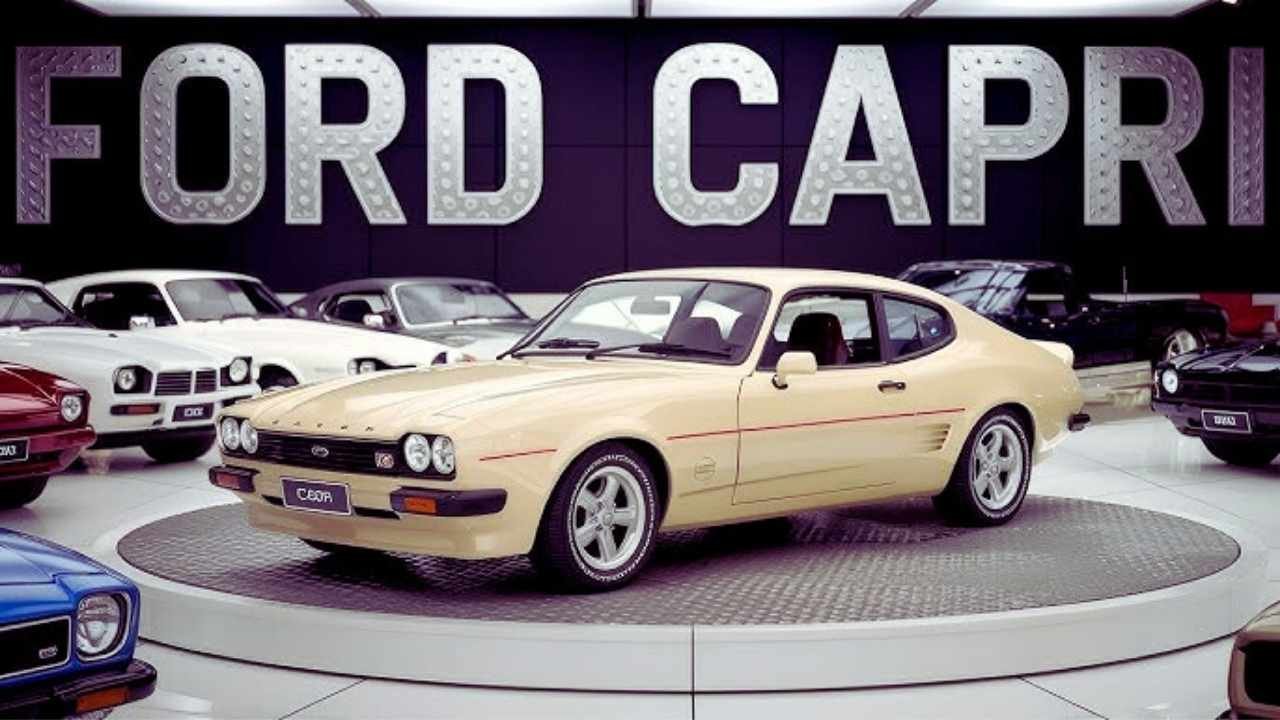
A European Star with American Muscle Vibes
In 1975, the Ford Capri Mk2 rolled onto European streets, turning heads with its sleek look and sporty soul. Launched in 1974 as the second generation of Ford’s “European Mustang,” it was built to mix style, speed, and affordability. After the 1973 oil crisis, drivers wanted cars that didn’t drain wallets at the pump but still felt fun. The Capri delivered, blending sharp design with practical smarts. It sold nearly 1.9 million units over its run, becoming a legend in the UK, where it ranked among the top-selling cars by 1977. Its charm even crossed the Atlantic, sold as the Mercury Capri in the US.
The 1975 model got upgrades that made it stand out. Ford smoothed the body for better aerodynamics and added bigger front disc brakes for safer stops. New safety rules called for chunkier bumpers, but they fit the Capri’s low, aggressive stance perfectly. With a hatchback for extra cargo space, it was practical enough for families yet cool enough for young drivers. Car shows buzzed with excitement, and road tests praised its balance of fun and function. The Capri wasn’t just a car; it was a lifestyle.
Engines That Kept the Thrill Alive
The 1975 Capri Mk2 offered engines for every kind of driver. The base 1.3-liter Kent four-cylinder was perfect for zipping through city streets while saving gas. For more kick, the 1.6-liter version added pep, and the 3.0-liter Essex V6 brought serious power for open roads. A new 2.8-liter Cologne V6 joined the lineup in 1975, offering a sweet spot of torque and efficiency. Most models came with a crisp four-speed manual, though a three-speed automatic was available for relaxed cruises.
Gas mileage mattered in the ‘70s, and the Capri delivered. Smaller engines got around 25-30 miles per gallon, while the V6s managed about 20. Performance was solid: the 3.0-liter V6 could hit 60 mph in roughly 9 seconds and reach 120 mph. The suspension, borrowed from Ford’s Cortina, kept handling tight, making twisty roads a blast. Whether you were dodging traffic or carving corners, the Capri made every drive feel alive.
| Engine Size | Horsepower | Top Speed (mph) | 0-60 mph (sec) |
|---|---|---|---|
| 1.3L Four-Cyl | 56 | 95 | 14 |
| 1.6L Four-Cyl | 75 | 102 | 12 |
| 2.8L V6 | 105 | 110 | 11 |
| 3.0L V6 | 138 | 120 | 9 |
Special Editions That Sparked Excitement
Ford knew how to make the Capri pop with limited editions. The 1975 John Player Special (JPS) was the star, launched in March with a nod to the racing team’s black-and-gold look. With bold pinstripes, gold wheels, and plush beige-black seats, it screamed style. Only a few thousand were made, making them collector’s gems today. Other trims, like the Ghia with its vinyl roof and fog lights, added luxury, while the base L kept things affordable.
These special models helped the Capri shine during tough economic times. In the US, the Mercury Capri skipped the 1975 model year to clear old stock but returned in 1976 with the Mk2’s updates. Its mix of flair and function kept it a favorite, proving Ford had a winner. Even now, car buffs hunt for clean Mk2s, and restored JPS models fetch top dollar at auctions.
A Legacy That Still Runs Strong
The 1975 Capri Mk2 wasn’t just a car; it was a symbol of freedom and fun. Its sleek lines and lively engines captured the spirit of the ‘70s, blending European finesse with Mustang-inspired grit. Today, it’s a cult classic, celebrated at car shows and cherished by collectors. The Capri’s story reminds us why some cars become more than machines: they carry dreams down every road.